
 Astilbe
  Flora Frost
 Astilbe (Arendsii Grp) 'Rhythm and Blues'
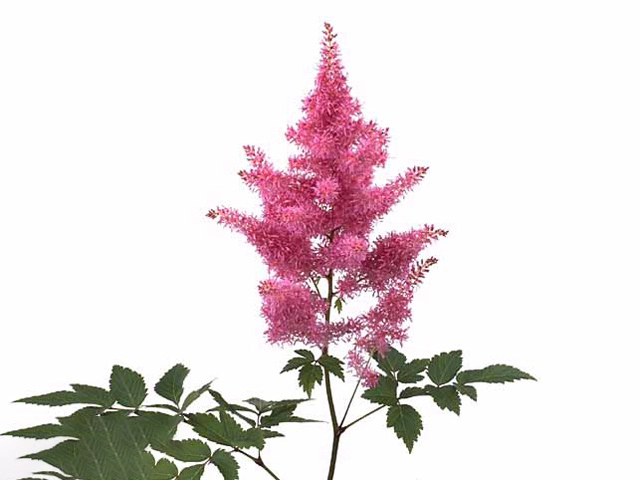
| Leaf margin | Biserrate |
| Flower color | Purple-light violet-075A |
| Soil fertility | Special demands |
| Inflorescence | Panicle |
| soil pH requirement | Neutral (pH 6,5 - 7,5) |
| Light conditions | Semi-shades |
| Leaf division | Diversely compound |
| Leaf, main color | Dark green |
| Soil type | Humus rich |
Astilbe (Arendsii Grp) 'Rhythm and Blues' is a stunning perennial plant commonly known as False Goat's Beard. The plant features beautiful purple to light violet flowers, which add a touch of elegance to any garden or landscape. It is a true delight for any gardening enthusiast.
One of the distinctive features of Astilbe 'Rhythm and Blues' is its biserrate leaf margin. This means that the leaves have small, sharp teeth along the edges, adding to its overall visual appeal. The leaves themselves are a deep, dark green, providing a rich backdrop to the vibrant blooms.
This particular variety of Astilbe has a unique inflorescence known as a panicle. The flowers are densely clustered on tall, erect stems, creating a stunning display. The combination of the purple-light violet flowers and the dark green foliage is eye-catching and brings a sense of harmony to any garden.
In terms of soil fertility, Astilbe 'Rhythm and Blues' has special demands. It thrives in humus-rich soil, which is well-draining and retains moisture. However, it is essential to note that the plant requires a neutral pH level between 6.5 and 7.5. Ensuring the optimal soil conditions will help the plant to grow healthy and flourish.
Astilbe 'Rhythm and Blues' prefers semi-shaded areas, making it an excellent choice for flower beds or borders beneath taller plants or trees. It can also be grown in containers and used as a focal point on patios or balconies.
When it comes to leaf division, this species of Astilbe has diversely compound leaves. This means that the leaves are divided into leaflets, giving it an interesting texture and adding depth to the plant's overall appearance.
To maintain the beauty and health of Astilbe 'Rhythm and Blues', it is crucial to provide it with the right growing conditions. Regular watering is necessary, ensuring the soil remains moist but not waterlogged. Applying a layer of mulch around the base of the plant can help retain moisture and prevent weed growth.
Additionally, dividing the plant every three to four years will help maintain its vigor and ensure it continues to produce abundant blooms. Dividing in early spring or fall is recommended for most reliable results.
In conclusion, Astilbe (Arendsii Grp) 'Rhythm and Blues' is a captivating perennial plant that commands attention with its stunning purple-light violet flowers and dark green foliage. Its unique leaf margin, inflorescence, and diversely compound leaves add to its overall charm. While it may have special demands when it comes to soil fertility, light conditions, and leaf division, providing the optimal care will reward gardeners with a beautiful and thriving plant. So, if you're looking to add a touch of elegance and beauty to your garden, consider adding Astilbe 'Rhythm and Blues' to your collection.
Market availability index by month:
| Jan. | Feb. | Mar. | Apr. | May | Jun. | Jul. | Aug. | Sep. | Oct. | Nov. | Dec. |
|---|---|---|---|---|---|---|---|---|---|---|---|
| 1 | 1 | 1 | 2 | 3 | 2 | 4 | 3 | 3 | 3 | 1 | 1 |