
 Astilbe
  Flora Frost
 Astilbe (Arendsii Grp) Music Series mixed
| Winter hardness | Excellent (USDA-zone 1,2,3,4) |
| Soil fertility | No special demands |
| Light conditions | Semi-shades |
| Moisture requirements | Wet; Moist |
| Soil type | Sandy; Peaty |
Astilbe, also known as the False Goat's Beard, is a beautiful flowering plant that belongs to the Arendsii Grp Music Series. It is a versatile and hardy plant that can withstand harsh winter conditions in USDA zones 1, 2, 3, and 4.
One of the great advantages of Astilbe is that it doesn't require any special soil fertility. It can grow in a variety of soil types, including sandy and peaty soils. This makes it an ideal choice for gardeners with different soil compositions.
Astilbe prefers semi-shade conditions, making it perfect for areas of your garden that receive partial sunlight. It thrives in moist environments, so it is generally recommended to keep the soil wet or moist. This can be achieved by regular watering or by planting Astilbe near a water source.
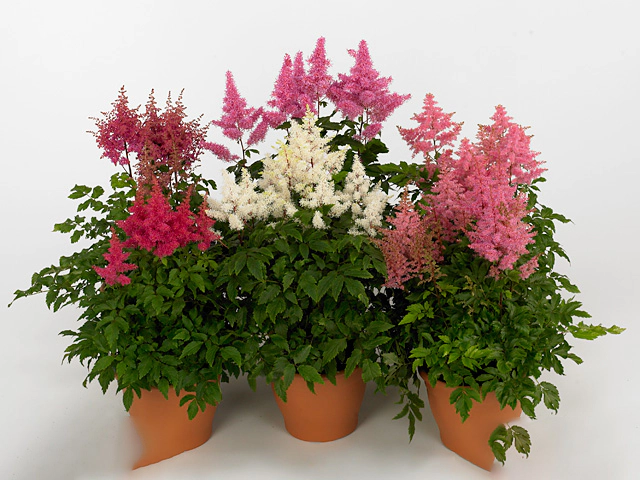
The False Goat's Beard produces stunning plume-like flowers that come in a range of colors, including shades of pink, purple, red, and white. These flowers bloom during the summer, creating a beautiful display in your garden.
In addition to its aesthetic appeal, Astilbe also attracts pollinators, such as bees and butterflies, making it an excellent choice for promoting biodiversity in your garden.
To ensure the best growth of Astilbe, it is recommended to plant it in early spring or early fall. Prepare the soil by loosening it and adding organic matter, such as compost, to improve its nutrient content. Dig a hole that is slightly wider and deeper than the plant's root ball and place the plant in the hole. Fill the hole with soil and gently press it down to eliminate any air pockets.
Regular watering is essential, especially during dry periods. Mulching around the base of the plant helps retain moisture and suppress weed growth.
Astilbe is a low-maintenance plant that requires minimal pruning. Deadheading, or removing spent flowers, will encourage continuous blooming. In late fall, it is advisable to cut back the foliage to the ground to promote healthy growth the following season.
Whether used as a focal point, in flower beds, or as part of a woodland garden, Astilbe's vibrant flowers and ability to withstand different soil and light conditions make it a popular choice among gardeners. Its winter hardiness adds to its appeal, making it a reliable and versatile plant for any garden. Consider adding Astilbe to your garden to enjoy its beauty and benefits.
Market availability index by month:
| Jan. | Feb. | Mar. | Apr. | May | Jun. | Jul. | Aug. | Sep. | Oct. | Nov. | Dec. |
|---|---|---|---|---|---|---|---|---|---|---|---|
| - | 1 | 3 | 3 | 4 | 3 | 3 | 2 | 1 | - | - | - |