
 Calathea
  Flora Frost
 Calathea lancifolia
| Flower scent | Unscented; Unscented |
| Leaf type | Foliage leaf |
| Inflorescence | Multi-flowered |
| Structure (tissues) | Herbaceous |
| Leaf division | Simple |
| Plant, growth type | Erect |
Calathea lancifolia, commonly known as the peacock plant or rattle snake plant, is a stunning addition to any indoor plant collection. This popular houseplant is celebrated for its stunning foliage and unique growth pattern.
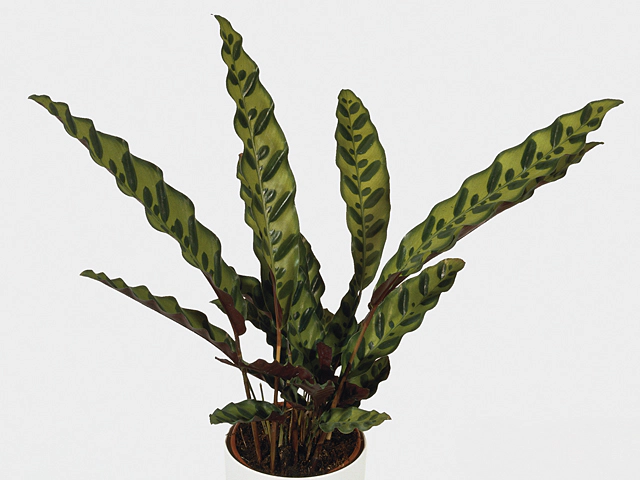
One of the standout features of the Calathea lancifolia is its foliage. The leaves are long, lance-shaped, and have a beautiful green color with distinct patterns. The prominent stripes resembling a peacock's tail feathers give rise to the plant's common name, peacock plant. The contrasting dark green and light green markings add an eye-catching element to any room.
Another distinctive characteristic of the Calathea lancifolia is its growth type. This plant grows upright, making it an excellent choice for those looking to add some height to their indoor garden. Its tall and slender stems give the plant a graceful appearance, resembling the slithering movement of a rattlesnake. This unique growth pattern makes it a standout choice for plant enthusiasts who want to add some drama to their space.
In terms of scent, the Calathea lancifolia is unscented. While some plants are treasured for their fragrant blooms, this particular species focuses on its visually appealing foliage rather than its scent. This makes it an ideal choice for individuals who are sensitive to strong smells or prefer a more subtle presence.
The Calathea lancifolia is renowned for its multi-flowered inflorescence. Although the flowers are not its main attraction, they can add an additional touch of beauty to the plant. The inflorescence consists of several small, delicate flowers that emerge from the central stem. While the flowers may not last long, they provide a lovely accent to the already stunning foliage.
When it comes to its structure and tissues, the Calathea lancifolia is considered herbaceous. This means that it has soft, non-woody stems and is not capable of producing extensive wood or bark. Its herbaceous structure gives it flexibility and allows for new growth and regrowth throughout its lifespan.
In terms of leaf division, the Calathea lancifolia has simple leaves. Simple leaves are undivided, with a single blade structure, making them easy to care for. This characteristic simplifies maintenance and ensures that even novice plant owners can successfully care for this stunning species.
When it comes to care, the Calathea lancifolia prefers bright, indirect light and thrives in slightly humid conditions. It is important to keep the soil consistently moist but not waterlogged to prevent root rot. Additionally, this plant benefits from occasional misting to increase humidity levels. Regular fertilization and a well-draining potting mix are also recommended to support its growth.
In conclusion, the Calathea lancifolia is a striking houseplant that captivates with its unique foliage, upright growth type, and multi-flowered inflorescence. With its unscented nature and simple leaf division, it is an excellent choice for individuals looking to add a touch of drama and beauty to their indoor space. Proper care and attention will ensure that this magnificent plant thrives and becomes a showstopper in any home or office.
Market availability index by month:
| Jan. | Feb. | Mar. | Apr. | May | Jun. | Jul. | Aug. | Sep. | Oct. | Nov. | Dec. |
|---|---|---|---|---|---|---|---|---|---|---|---|
| 4 | 3 | 3 | 3 | 3 | 3 | 3 | 4 | 4 | 3 | 3 | 3 |