
 Campanula
  Flora Frost
 Campanula glomerata
| Winter hardness | Excellent (USDA-zone 1,2,3,4) |
| Flower color | Purple-dark blue violet-N088A; Purple-dark blue violet-N088A |
| Soil fertility | No poor soils |
| Plant height | 70 - 80 cm; 80 - 90 cm |
| Flower length/hight | 3,5 - 4 cm |
| Light conditions | Semi-shades; Sunny |
| Plant, growth type | Erect |
| Leaf colour, pattern | Unicolored |
| Flower color distribution | Unicolored |
| Toxicity (if consumed) | Not or barely |
| Moisture requirements | Well-drained |
Campanula glomerata, commonly known as Bellflower, is a delightful perennial plant that displays excellent winter hardness. It can thrive in USDA-zone 1,2,3,4 regions, making it a great addition to gardens in colder climates.
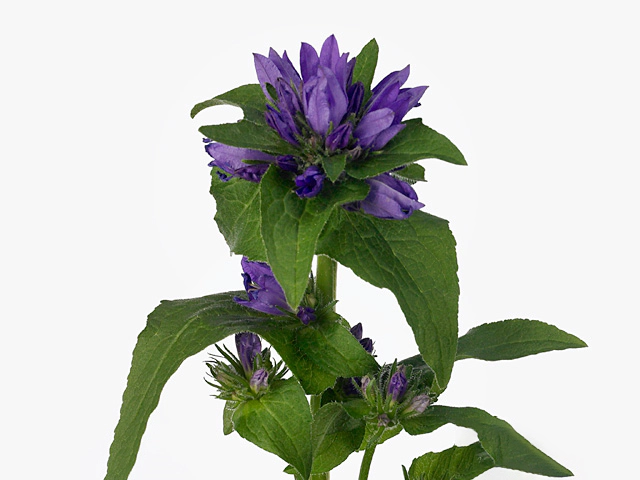
One of the standout features of Campanula glomerata is its beautiful flower color. The blossoms range in shades of purple-dark blue violet, specifically classified as N088A. This vibrant color adds a touch of elegance and charm to any garden or landscape.
When it comes to soil fertility, Campanula glomerata prefers not to be grown in poor soils. It thrives best in well-drained soil that is nutrient-rich. Ensuring the plant receives the necessary nutrients will promote optimal growth and ensure its longevity.
In terms of size, Campanula glomerata can reach a height of 70 to 80 centimeters or even 80 to 90 centimeters, making it a moderate-sized plant. Its erect growth type gives it a sturdy and upright appearance, making it an excellent choice for borders, flower beds, or even as a standalone plant.
The leaves of Campanula glomerata are unicolored, providing a lush green backdrop to the stunning purple-dark blue violet flowers. This creates a visually striking contrast that further enhances its overall beauty.
The flower color distribution is also unicolored, meaning the entire blossom is consistent in color. This adds to the plant's aesthetic appeal and makes it a lovely focal point in any garden.
Gardeners will appreciate the fact that Campanula glomerata is not or barely toxic if consumed. However, it is essential to exercise caution and keep this plant out of reach of children and pets.
In terms of moisture requirements, Campanula glomerata prefers well-drained soil. Overly wet or waterlogged conditions can be detrimental to its growth. It is important to strike a balance, ensuring the plant receives adequate moisture without becoming waterlogged.
When it comes to light conditions, Campanula glomerata thrives in semi-shady to sunny areas. This versatility makes it suitable for a wide range of garden settings, offering flexibility to gardeners in terms of placement.
In conclusion, Campanula glomerata, or Bellflower, is a stunning perennial plant with excellent winter hardness. Its vibrant purple-dark blue violet flowers, unicolored leaves, and versatile growth type make it a beautiful addition to any garden. As long as the soil is well-drained and nutrient-rich, and it receives the appropriate amount of sunlight, it is relatively easy to care for. With the right conditions, Campanula glomerata can thrive and bring lasting beauty to any landscape.
Market availability index by month:
| Jan. | Feb. | Mar. | Apr. | May | Jun. | Jul. | Aug. | Sep. | Oct. | Nov. | Dec. |
|---|---|---|---|---|---|---|---|---|---|---|---|
| 1 | 2 | 3 | 3 | 4 | 3 | 3 | 2 | 1 | 1 | 1 | 1 |