
 Dianthus
  Flora Frost
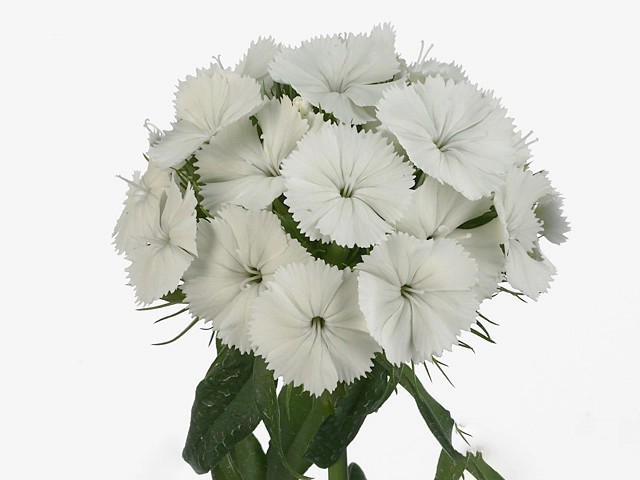
 Dianthus barbatus Duke Breanthus
| Leaf tip | Pointed/acute |
| Flower type | Single |
| Flower color | White-white-155C |
| Leaf, general shape | Lanceolate |
| Flower diameter | 2 - 2,5 cm |
| Leaf width | 3 - 4 cm |
| Leaf size | 10 - 15 cm |
| Inflorescence diameter | 5 - 10 cm |
| Leaf, main color | Dark green |
| Flower color distribution | Unicolored |
Dianthus barbatus, commonly known as Sweet William or Carnation, is a beautiful flowering plant that belongs to the Dianthus family. Its scientific name "barbatus" means bearded, referring to the fringed petals of the flower. This perennial plant is native to Europe and is widely cultivated for its vibrant and fragrant flowers.
One of the distinctive characteristics of Dianthus barbatus is its pointed or acute leaf tip. The leaves are lanceolate in shape, with a dark green color that beautifully complements the flowers. The leaves are relatively large, measuring between 10 to 15 centimeters in length, and have a width of approximately 3 to 4 centimeters.
The flowers of Dianthus barbatus are single, meaning they have only one layer of petals. The flower diameter ranges from 2 to 2.5 centimeters, making them relatively small and delicate. The most common color variety of these flowers is white, specifically described as white-white-155C. This unicolored distribution gives these plants a clean and elegant appearance.
The flowers of Dianthus barbatus are known for their wonderful fragrance, which is often described as spicy or clove-like. Their sweet, pleasant scent attracts bees, butterflies, and other pollinators, making them a popular choice for gardens and floral arrangements.
When it comes to the inflorescence, Dianthus barbatus forms a cluster of flowers that can measure between 5 to 10 centimeters in diameter. This dense arrangement creates a stunning display of color, adding beauty to any garden or floral arrangement.
In addition to their aesthetic appeal, Dianthus barbatus plants are relatively easy to grow and care for. They prefer well-drained soil and full sun exposure, although they can tolerate some partial shade. These plants are quite resilient and can withstand moderate cold temperatures.
Dianthus barbatus is often used as a bedding plant, adding a splash of color to flower borders, containers, or rock gardens. Their compact size and prolific flowering make them an excellent choice for adding charm and beauty to any landscape.
Whether you are an avid gardener or simply appreciate the beauty of nature, Dianthus barbatus, with its pointed leaves and gorgeous single flowers, is sure to captivate your attention. Its timeless elegance and enchanting fragrance are a testament to the wonders of nature and the joy it can bring to our lives.
Market availability index by month:
| Jan. | Feb. | Mar. | Apr. | May | Jun. | Jul. | Aug. | Sep. | Oct. | Nov. | Dec. |
|---|---|---|---|---|---|---|---|---|---|---|---|
| 1 | 2 | 2 | 3 | 4 | 2 | 1 | 1 | 1 | 1 | 1 | 1 |