
 Hedera
  Flora Frost
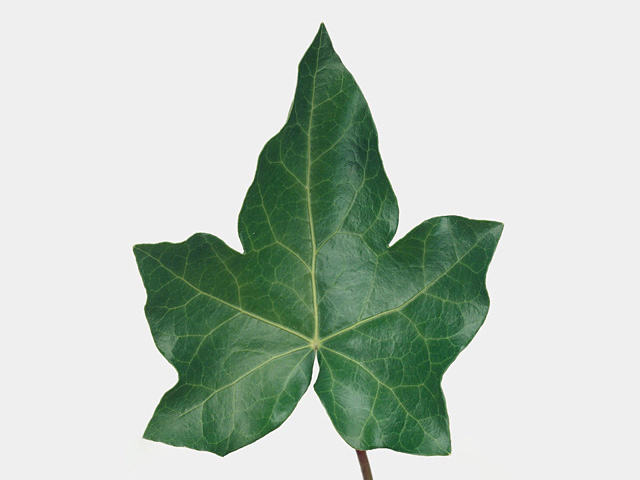
 Hedera helix (leaf)
| Fruit type | Berry |
| Leaf margin | Digitately lobed; Entire |
| Leaf type | Foliage leaf |
| Winter hardness | Good (USDA-zone 5, 6) |
| Leaf, general shape | Cordate (heart-shaped); Ovate (egg-shaped); Rhombic |
| Inflorescence | Umbel(-like) |
| Leaf duration | Evergreen |
| soil pH requirement | Neutral (pH 6,5 - 7,5); Alkaline (pH > 7,5) |
| Light conditions | Semi-shades; Shady |
| Leaf division | Simple |
| Toxicity (if consumed) | Fairly |
Hedera helix, commonly known as ivy or common ivy, is a popular and versatile plant that belongs to the Bindwood family. It is primarily grown for its foliage and is widely used as an ornamental plant in gardens and landscapes. Ivy is known for its trailing growth habit and its ability to climb and cover walls, fences, and other structures.
One of the distinctive features of Hedera helix is its leaf, which is generally heart-shaped (cordate), egg-shaped (ovate), or rhombic in shape. The leaves are evergreen, meaning they remain on the plant throughout the year, giving it a lush and green appearance even during winter. The leaf margin can be either digitately lobed or entire, depending on the cultivar.
In terms of fruit, Hedera helix produces small berries. These berries are the result of the plant's pollination and are typically dark in color. While the berries are not generally consumed by humans, they serve as a food source for birds and wildlife.
Hedera helix is a hardy plant that can withstand winter conditions well, particularly in USDA zones 5 and 6. It can tolerate a wide range of soil pH levels, from neutral (pH 6.5 - 7.5) to alkaline (pH > 7.5). This means that it can thrive in different types of soil, as long as the pH remains within the specified range.
When it comes to light conditions, Hedera helix prefers semi-shades or shady areas. It can tolerate some sunlight but excessive exposure to direct sunlight may cause leaf burn or damage. Therefore, it is best to provide it with some shade to ensure optimal growth and health.
The leaves of Hedera helix are simple in division, meaning they are not divided into multiple leaflets like some other plants. This simple leaf structure adds to the plant's overall aesthetic appeal.
While Hedera helix is generally considered safe for humans, it should be noted that the plant can be toxic if consumed in large quantities. The toxins present in ivy can cause irritation, allergic reactions, and digestive issues. It is best to keep the plant out of reach of children and pets to prevent accidental ingestion.
In conclusion, Hedera helix, or common ivy, is a versatile and attractive plant that can enhance the beauty of any garden or landscape. With its evergreen foliage, trailing growth habit, and ability to climb and cover structures, it is a popular choice among gardeners. However, caution should be exercised when handling the plant, as it can be toxic if consumed. Overall, Hedera helix is a valuable addition to any garden, bringing both aesthetic appeal and ecological benefits.
Market availability index by month:
| Jan. | Feb. | Mar. | Apr. | May | Jun. | Jul. | Aug. | Sep. | Oct. | Nov. | Dec. |
|---|---|---|---|---|---|---|---|---|---|---|---|
| 4 | 3 | 3 | 3 | 3 | 3 | 3 | 3 | 3 | 3 | 3 | 3 |